
Middle Eastern Pantry Essentials: What to Buy and How to Use It
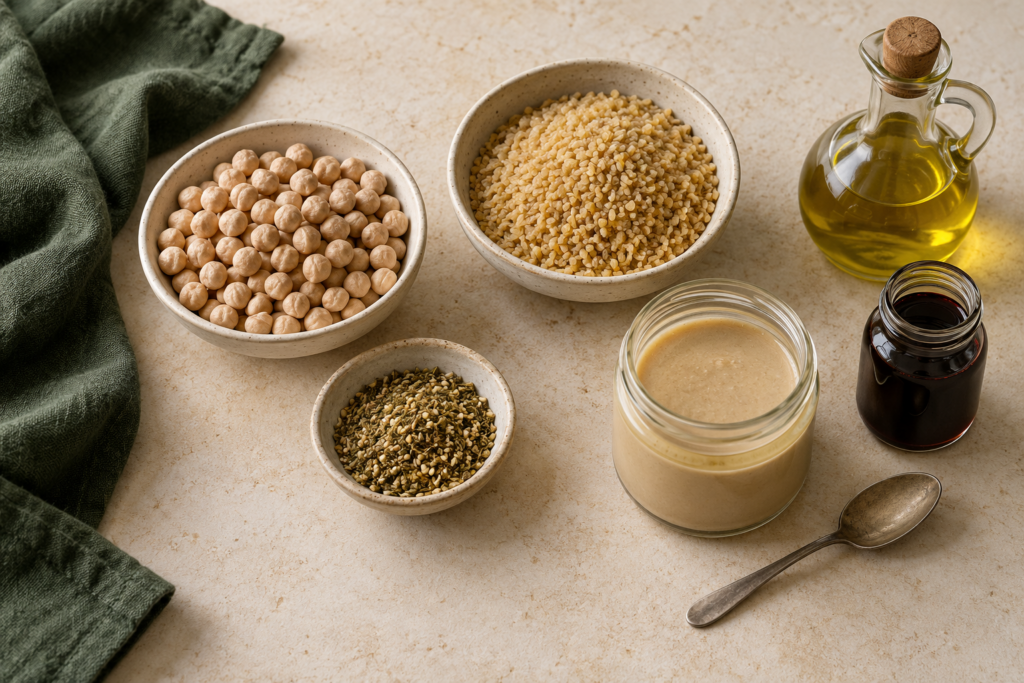
A few Middle Eastern pantry essentials make everyday meals easier. These seven staples are especially common in Levantine cooking, though ingredients and recipes vary across the region.
Tahini
Buy plain sesame paste. Blend it into hummus, or whisk with lemon juice, garlic and water for a sauce to serve with falafel or grilled meat.
Za’atar
Choose a herb blend with sesame and sumac; recipes vary. Mix with olive oil for flatbread, or serve with bread for dipping.
Sumac
Buy ground sumac for a tart, citrus-like flavor. Sprinkle it over sliced onions, add it to fattoush dressing, or use it in a chicken marinade.
Bulgur
Check the grind before buying: fine bulgur suits tabbouleh and kibbeh; coarse bulgur works well in pilafs. Follow the recipe or packet for preparation.
Chickpeas
Canned chickpeas are handy for quick hummus and salads. Dried chickpeas suit batch cooking; soak and cook them according to your recipe before using.
Extra-virgin olive oil
Keep a bottle for dressings, dipping bread and finishing hummus. Pair with za’atar for an easy snack or lunch alongside vegetables and flatbread.
Pomegranate molasses
Buy the thick, tangy pomegranate condiment used in muhammara and fattoush dressings. Start with a little and taste as you go; sweetness varies between brands.
Start small
Begin with chickpeas, tahini, olive oil and za’atar, then add ingredients for the dishes you plan to cook. Follow package storage instructions after opening.
Explore Halal Mart
Browse our international groceries, explore more pantry guides, or ask our team about current availability before visiting.
Explore international groceriesRead our guide to Pakistani spicesChoose basmati rice for your mealContact Halal Mart